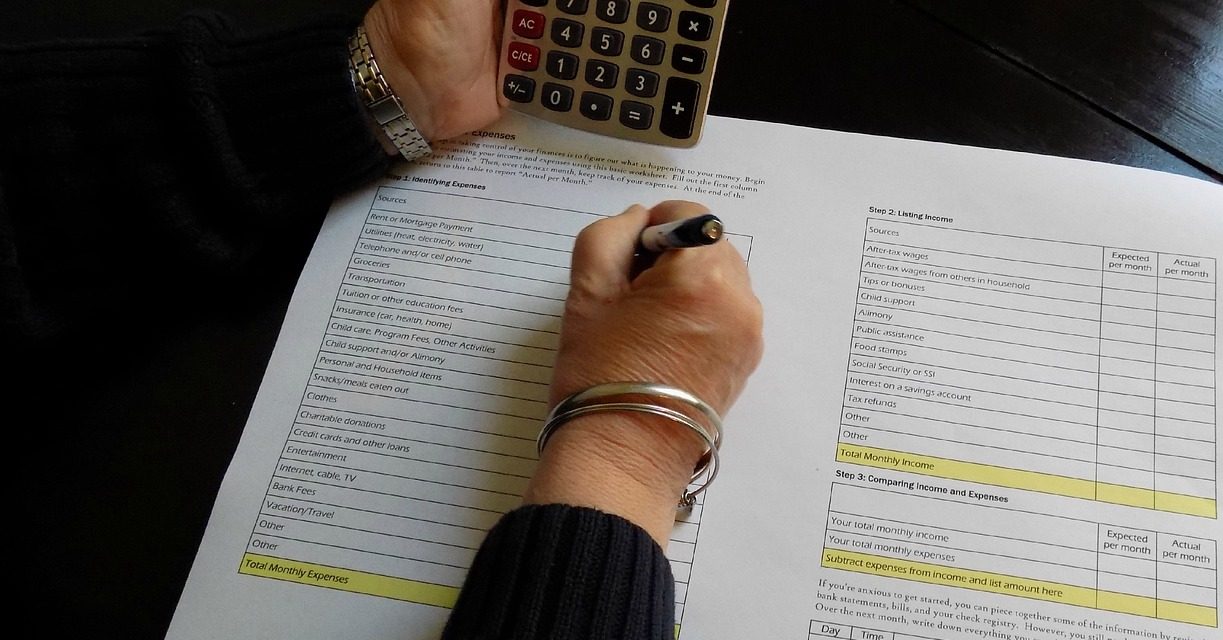
Image by Brandi Day from Pixabay
Uncertainty can kill hope in business. Best practices in management mean having the right information to alleviate uncertainty in business. For that you need the right tools. One important tool – know your break-even point (BEP).
A BEP analysis should be an integral part of your financial planning. If it isn’t, you can count on suffering from unnecessary stress – emotionally and financially. You need to be able to make the right decisions because positive cash flow is paramount to facilitate success.
BEP benefits
Generally, there are multiple benefits to knowing your BEP, for example:
1. You can track when or if you’ll break even.
2. You’ll be in a better position to evaluate whether your new products or services are good ideas.
3. Whether to expand in other ways.
4. Businesspeople who perform such analysis are often more profitable.
5. In a loan scenario, the bank will want to know your BEP. Plus, you’ll know how much you’ll need to sell to successfully pay off the loan and to make a profit.
Success can be dangerous as it sometimes leads to complacency in financial management. If your business is on a roll – your profits are strong and your cash flow is positive – you’re probably not worried about your financial position.
But one thing is clear in business – you can expect negative surprises. You should be prepared for any contingency. And there are many.
You need to be able to make the right decisions because positive cash flow is paramount to facilitate success.
To name a few: You could lose your best talent, your products can reach the end of their life cycles, or you can be hit by an earthquake or hurricane.
Sure, it helps to stay up-to-date on your checking account balance, general ledger, sales receipts and your monthly profit and loss statement. But these are insufficient – if you’re to accurately ascertain how and when to pay the bills and to meet your payroll, especially in this uncertain economy.
Time is a valuable commodity in business. Even in good economic times, most entrepreneurs are too busy putting out fires and reacting to problems.
If you understand where your BEP is, you’ll know instantly whether you can cover your obligations and know how far ahead or behind you are in terms of cash flow. The longer you wait to develop such financial information is to invite disaster. So, it’s best to be proactive.
In essence, the BEP is where your revenue equals the cost of sales plus expenses.
Mistakes to avoid
It’s a mistake to determine just your cost of goods or services but failing to consider your fixed costs or operating expenses, which are also called overhead.
Here’s a basic BEP formula: BEP = Fixed Costs divided by Gross Profit as a Percentage.
For example, if your fixed costs average $2,000 per month and your gross profit is 40 percent, your cost of goods is 60 percent.
How this BEP is determined: $5,000 = $2,000 divided by .4.
This formula indicates you will have to achieve $5,000 in sales to cover your cost of goods and fixed expenses.
If you attain your BEP in each reporting period you’ll be OK. After you achieve the BEP, the balance is yours.
Remember, this proactive tool is helpful to avoid or get out of difficulties while you still have time to do the necessary footwork. So manage the books and be ready for change – any change — especially negative change.
From the Coach’s Corner, here are related resource links:
Primer for Best Practices in Preparing Financial Statements — A good financial system is vital for your business. Not only will a properly prepared financial statement tell you what’s transpired in your business, it will give you a snapshot regarding your future. Measurement of cash flow is paramount. In the two forms of accounting – cash basis vs. accrual basis – the cash-basis system is much simpler.
Step-by-Step Solutions for a Company Turnaround — If you’re struggling like many businesses, you know the myriad of challenges exacerbated by the economy. However, despite the challenges, it is possible for businesses to successfully complete a financial turnaround. First, you might have to put on a different set of glasses – see this economy as a marvelous opportunity.
8 Simple Strategies to Give You Pricing Power — If you’re struggling with pricing strategies, you’re not alone. Many big companies have struggled, too. By way of explanation, according to a study, almost 90 percent of executives in a global survey forecasted their continued growth. However, they anticipated implementing just minimal price increases as they continue to slash costs, or at least closely monitor expenses, for positive cash flow.
You Can Creatively Manage Your Cash Flow 7 Ways — If you’re taking the pulse of your business, of course, the first thing to consider is your cash flow. If your cash flow is poor, you feel poor because you can’t pay the bills nor can you use money for what you’d like to do. Your image can also suffer with vendors or with customers, if you don’t manage your cash flow. Creativity, planning and communication are all vital in cash flow considerations.
Change is inevitable, except from a vending machine.
__________