
Marketing lessons from a legendary marketer and network announcer and case studies to provide marketing solutions in today’s economic environment.
A reader’s request from a marcom professional:
“I’m new to my company as a Marcom professional, but my boss already has high expectations and is pressuring me to do for more for faster revenue. That includes attacking our competitors. Help!”
It appeared to me her boss was desperate and expected miracles in marketing and communications. If you are in a similar situation, consider until you develop trust and respect from your new employer, you’ve got a tough job.
Otherwise, you’ve got two choices: Find another job or develop a successful strategy and market your ideas to your boss. A marcom professional needs to know how to sell ideas inside the office as well as outside. Incidentally, there are four keys to marketing your ideas to CEOs.
Also, the value of marketing is often underestimated and it’s the scapegoat when other factors, such as poor customer service should be blamed for poor sales.
Marketing professionals often complain about a lack of senior management respect or lack of access to the CEO. What’s more, marketing budgets are the first to be slashed during tough times. Ironically, that’s the time to increase marketing.
Legendary marketing genius
Del Sharbutt, the legendary broadcaster with a cavernous voice, was my broadcasting and marketing mentor in the mid-1970s. (See his bio in these online articles: The New York Times or Wikipedia.)
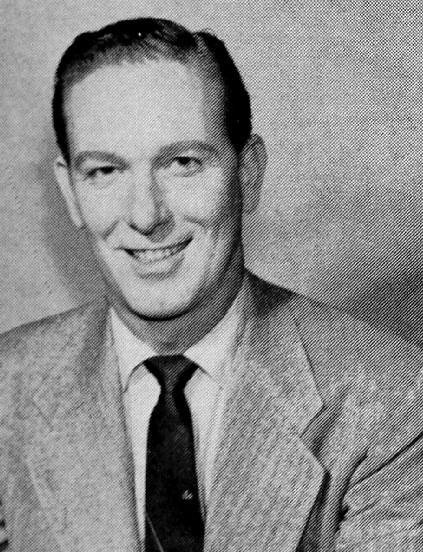
Del Sharbutt – 1955
He was retired when I met him. I was news director at an all-news radio station.
Del’s career included being a news anchor for the Mutual Broadcasting System, which had been the world’s largest radio network. He was an emcee for Frank Sinatra’s big band concerts, and was the creator of two hugely successful advertising slogans: “LSMFT, Lucky Strike Means Fine Tobacco” and Campbell Soups’ “M’m! M’m! Good.”
When he spoke I listened. Our ratings skyrocketed. Nine men out of 10 men tuned into our all-news station.
Even though my radio station had jumped from last in the ratings race to second place in just three months, it had challenges attracting young women in a competitive California market. Del suggested I interview elementary school kids about what they wanted for Christmas. It was an old idea but the results were astounding.
Old school/new school marketing
One of his responses to problems still pays me dividends: “Kid, every experience is a learning experience.”
When facing challenges, I learned to ask myself four questions:
1. What in my past has prepared me to deal with this challenging situation?
2. What is needed short-term and long-term?
3. How can I maximize customer loyalty?
4. What new initiatives are needed?
Hence, the question: What in my past has prepared me to deal with this challenging situation?
Later, for challenges in customer loyalty, I utilized my interest in sports. Defense in sports is a good metaphor for effective customer loyalty programs. Baseball teams win the World Series essentially because of great pitching and error-free play in the field.
So to grow your business with repeat customers, protect your turf with a strong customer loyalty program while you also strategize for new opportunities.
Case study of a high-tech company
One of my firm’s clients, a life sciences imaging company, contracted me to analyze why its sales were flat. The marketing manager was frustrated so I suggested that I interview a cross section of their customers. One of the keys was to ask open-ended questions to get comprehensive answers instead of yes or no answers.
The marketing manager liked my research approach, but he only wanted me to talk with the disloyal customers. My goal was to get a snapshot of the big picture – an overview of what all the client’s customers liked and disliked. I persuaded the client to allow me to interview high-volume satisfied customers; second-tier customers; and customers who stopped buying altogether.
The client sent letters to 25 of its worldwide customers to expect a telephone call from me. The most helpful solutions evolved from an interview with one of my client’s biggest customers, who told me: “We like them a lot.” When I asked the customer what he liked the least, he said: “They’re great people and we like everything about them.”
But in a follow-up question, I asked: “If you had a magic wand, what would you change about the relationship?”
The customer answered: “When we have a problem, their customer service is a nightmare.”
Also, my recollection is that the client’s technicians and customer service reps rarely – if ever – said thank you to their customers.The nightmarish quote was a shock to the marketing manager. He asked me to present my findings to the company’s board of directors. The board was astounded.
Customer loyalty program
For a solid foundation, these areas need to be addressed for an effective customer loyalty program:
- Make certain that everyone in your company has an attitude of gratitude and says thank you to customers either for their purchases or for even just considering your company’s products and services.
- Enhance trust by soliciting feedback from your customers. Act on their comments quickly.
- Make certain customers are fully aware of your full line of products.
- Develop a customer rewards program and value-added programs to multiply sales.
- Develop a customer-privacy policy. Communicate it with customers.
More sagacious advice from Del Sharbutt
Avoid making comparisons in marketing. As much as possible, act as if your company is the true leader in your marketplace.
If your boss tells you to attack competitors when talking with your prospective customers, remember: You never want to be known for such tactics. Always take the high road.
When the news media or customers ask you for a comment on your competitors, immediately respond with a compliment. Then, toot your company’s horn. Otherwise, you will turn off customers and you’ll find yourself in the unfortunate position of having to cut prices.
So, remember: If you use old school/new school marketing, good things will happen.
From the Coach’s Corner, here are related articles:
Rock in Your Marketing Messages with 5 Writing Tips — Words are powerful – if they’re used strategically and rock. The challenge is to help your prospective customers quickly understand your message. Here’s how.
Want More Business? Build Trust with Consumers…Here’s How – With consumers trying to cope with information overload – you will increase B2C sales with long-term customer loyalty – if you build trust by using best practices.
Understanding Customers: Social Media Teaches Another Lesson – Marketing lessons from a legendary marketer and network announcer and case studies to provide marketing solutions in today’s economic environment.
“The aim of marketing is to know and understand the customer so well the product or service fits him and sells itself.”
-Peter Drucker
__________