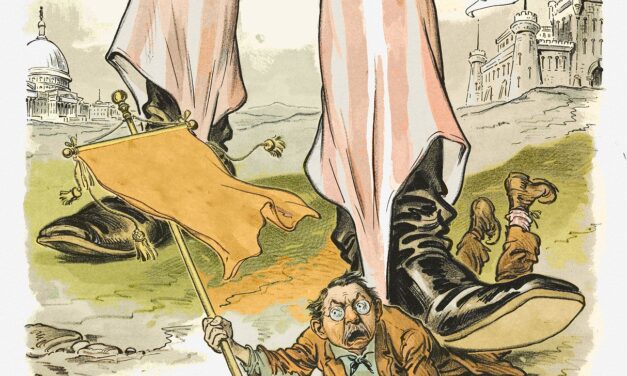
‘Ruling Class’ Beats Voters – Thanks to Washington Supreme Court
Feb. 28, 2013
“The Ruling Class — now, even the deviancy of the old nobility is becoming more commonplace…as once they were given land by the sovereign, upon which to live well…now they are given government pensions and benefits.”
-frequent Biz Coach reader
Washington state businesspeople and consumers, alike, have been dealt a blow by the state Supreme Court. In a 6-3 ruling, the court threw out the voter-approved mandate requiring a two-thirds legislative vote in order for lawmakers to raise taxes.
The court dubiously ruled such voter-approved initiatives are unconstitutional. The ruling followed a lawsuit by left-leaning Democrats and groups opposing the will of the taxpayers. So, the “ruling class” won.
Washington’s “ruling class” — including many lawmakers, bureaucrats and public employee unions — marches forward with deficit spending and lucrative pensions for state workers. Washington state’s unfunded pension liability is $52 billion, according to Retirement Benefit Solutions (http://www.usrbs.com/unfunded.html).
The two-thirds requirement was passed by voters to require the Legislature to honor voters’ wishes in five elections:
- 1993
- 1998
- 2007
- 2010
- 2012
But each time the Legislature circumvented the voter-approved wishes. Under state law – if legislators wait two years – they can violate the will of the people by changing the initiatives with only a majority vote.
“Our holding today is not a judgment on the wisdom of requiring a supermajority for the passage of tax legislation,” the majority opinion said.
“Such judgment is left to the legislative branch of our government. Should the people and the legislature still wish to require a supermajority vote for tax legislation, they must do so through constitutional amendment, not through legislation,” added the majority opinion.
The bad news: So once again, tax increases can be imposed by a single vote of the Legislature’s two bodies, the House and Senate, and a signature by the governor.
Some good news
A silver lining: The state Senate is controlled by Republicans. They’re on record – vowing to oppose tax increases.
The GOP took charge of the Senate, thanks to two Democrats: Tom, D-Medina, and Tim Sheldon, D-Potlatch. This year, they began caucusing with the Republicans.
Generally, Democrats are looking forward to raising taxes according to published reports. As a result of too-much spending, Washington perennially has a budget deficit. This year, the deficit is $1 billion.
Think tank’s permanent solution
“For the past 20 years the voters have consistently made clear they want their lawmakers to reach a broad consensus on the need to raise taxes or include the voters directly on the decision,” said Jason Mercier of the Washington Policy Center (WPC), www.washingtonpolicy.org.
“Today, the Supreme Court invalidated this taxpayer protection but did not negate the fact that on five separate occasions the voters have demanded this requirement most recently with statewide passage of I-1185 with a 64 percent vote and approval in 44 of the state’s 49 legislative districts,” he added.
“With voters and lawmakers repeatedly enacting the supermajority vote for taxes requirement over the past 20 years, what could be more representative of the public will than allowing a vote of the people on a constitutional amendment such as SJR 8205 to help resolve this debate once and for all?” he asked.
“There is nothing for lawmakers to fear by sending SJR 8205 to the voters but the will of the people,” he asserted.
Sen. Don Benton, R-Vancouver and Sen. Pam Roach, R-Auburn, in joint resolutions, are calling for the state’s constitution to be amended – to stop the chicanery and violation of voter wishes. The amendment would not allow legislators to shelve the law in order to impose tax increases.
Conclusion
The WPC’s advocacy for a constitutional amendment makes sense.
In addition, here’s a common-sense question: How long will voters allow the “ruling class” lawmakers to stay in power?
From the Coach’s Corner, if you want to track the state Legislature’s bills, visit: washingtonvotes.org.
“The problem with political jokes is they get elected.”
-Henry Cate VII
__________
Author Terry Corbell has written innumerable online business-enhancement articles, and is a business-performance consultant and profit professional. Click here to see his management services. For a complimentary chat about your business situation or to schedule him as a speaker, consultant or author, please contact Terry.
10 Year-end Payroll and Tax Tips for Small Businesses
Dec. 13, 2012
In addition to hoping for a strong Christmas-selling season, small business owners have at least one other major concern. That would be finalizing their year-end payroll and tax planning for advantageous financial and human resources positioning.
To stay competitive in this difficult marketplace, it’s vital to be proactive. Of course, you should be very familiar with your responsibilities – along with your financial advisor’s input and research with the Internal Revenue Service.
At the very least, you’ll want to avoid tax penalties or unnecessarily attracting a nerve-wracking IRS audit.
You might wish to consider these 10 tips:
1. To qualify for the Expanded Tax Credit, hire a veteran. Depending on your hiring situation, you can claim up to $9,600/veteran as a business. Nonprofits can get a credit up to $6,240.
Note: There are conditions, such as the wage amount, number of hours to be worked, how long the veteran has been unemployed, and whether the person is disabled.
2. Evaluate your benefit offerings. Instead of salary increases, you might be better off if you provide your employees with fringe benefits for maximum tax benefits.
IRS publication 15 can give you ideas on the pre-tax fringe benefits that are available, such as child-care assistance or health vision. Of course, a lot depends on your workforce situation.
3. Bonuses have to be handled carefully. Be mindful that bonuses have to be processed in your regular payroll – including payroll tax withholding, employer matching of FICA and Medicare taxes, and FUTA taxes. For employee-morale reasons, many employers like to give a high, flat amount. So, it’s important to take into account withholding amounts, and gross up from the net amount.
Note: Bear in mind that FUTA, the Federal Unemployment Tax Act, is bad news for employers in 18 states. Those states borrowed money from the federal government to keep their unemployment insurance (UI) trust funds solvent. However, they didn’t pay off the loans by Nov. 10, 2012, which means a higher UI rate.
4. Check with your employees. Is their declared number of exemptions accurate for Form W2 reporting? This should be done by the last payroll report in 2012. A helpful document on withholding and exemptions is IRS Publication 505.
This will save you time. Because once you issue Form W2 to workers, and if any amounts are incorrect, you’ll have to provide a W-2c form for each with the IRS.
5. Verify Tax all IDs. Confirm all tax ID numbers are correct. Correct any discrepancies before your last payroll in 2012.
6. Make sure gross wages are recorded accurately in your system. Your accounting software will help you on the following: On your profit-and-loss statement, your paid payroll taxes need to be segregated as a different line item. Your balance sheet should reflect all withholdings on a current liability account.
Note: Make sure you’re balanced on these figures. That means the payroll expenses on your tax return should be equal to what you report on Form W3.
7. Be careful with any payroll adjustments. It’s not uncommon to have any voided or manually issued paychecks. They should be correctly handled before you final 2012 payroll, and completed before December 28, 2012.
8. Report any missing wages or miscellaneous income/tax credits. Again, before your final 2012 payroll report, document such items as COBRA payments, fringe benefits, employee moving expenses or other employee expense reimbursements.
9. Make sure you’re aware of any rate changes with your state’s UI regulator. Statements will be issued in January 2012. Be certain you’re up-to-date.
10. Remember your health-insurance expenses. Your health-insurance expenses should be inserted on your employees’ Form W2.
And, oh, yes. Have fun!
From the Coach’s Corner, here are related financial tips in these articles:
- In Q4, Businesses Should Plan to Use at Least 5 Strategies for 2012 Tax Returns
- For the Best Cash Flow, Manage Your Inventory Costs with 8 Tips
- Accounting / Finance – Why and How to Determine Your Break-Even Point
- Do You Know What Drives Your Profit?
- Step-by-Step Solutions for a Company Turnaround
All tax reports are in. Life is now officially unfair.
__________
Author Terry Corbell has written innumerable online business-enhancement articles, and is also a business-performance consultant and profit professional.Click here to see his management services. For a complimentary chat about your business situation or to schedule him as a speaker, consultant or author, please contact Terry.
Will 5th Time Around be the Charm for Washington State Voters?
We’ll soon know if lawmakers will listen to voters on taxes as the Legislature convenes Jan. 14
Updated Jan. 12, 2013
In terms of time management and aggravation, people in Seattle and throughout Washington dislike having to perform the same chore twice. Especially, when the chore is necessitated by politicians’ disingenuous behavior.
But when it comes to taxes, many lawmakers in the Washington State Legislature mistakenly think it’s OK to annoy voters on the same issue over and over again.
Five times in the past two decades, voters have passed initiatives directing the Legislature not to raise taxes without a two-thirds majority or voter approval. The initiatives require that lawmakers wait two years before voting to circumvent the will of the people.
So, just like clockwork — as soon as the two-year period expires – guess what? The merry-go-round ride starts again, as lawmakers proceed to violate the will of the people. Repeatedly, voters complain they don’t enjoy the rides and have passed tax initiatives.
Voters most-recently spoke on Election Day in 2012 when they easily passed I-1185. In approving the initiative, voters also told the legislators to rescind their two tax hikes passed in the 2012 session.
On many occasions over the years, lawmakers haven’t been transparent in their behavior. Fortunately, the state’s leading think tank – the Washington Policy Center (WPC) – uses terrific investigative techniques to inform the electorate with excellent analyses about lawmakers’ chicanery.
“Just in case a translation for these votes is really needed, lawmakers should focus their attention on balancing the 2013-15 without tax increases,” blogged Jason Mercier, WPC’s director, Center for Government Reform. His piece was entitled, “Olympia: Can you hear taxpayers now?”
He also wrote:
“Since I-1185 was anything but new policy (most recently passed by 64% of the voters in 2010) our policy analysis advised voters to treat the decision as an opportunity to clearly frame the budget debate and send a message to Olympia that voters weren’t kidding the last four times they adopted this requirement with the hope that our elected officials will feel some obligation to their constituents to end this debate once and for all by referring the question to voters in the form of a constitutional amendment.”
Prior to the 2012 election, WPC queried 128 candidates and lawmakers:
“If Initiative 1185 is adopted, would you vote to allow the people of Washington to have the opportunity to vote on a state constitution amendment to require a supermajority vote in the legislature to raise taxes?”
Unfortunately, only 109 of them – 52 percent – responded. See their replies here. (WPC will update the survey to show which of them were elected.)
Recently, in a Tacoma News Tribune op-ed, Mr. Mercier also called for even-more legislative action:
“A constitutional amendment would provide the public and businesses with predictability about whether this tax protection will exist from year to year and whether or not the four-time (pending fifth) approval of the voters for this policy was a fluke or actually reflects their consistent and ongoing desire for lawmakers to build a strong public consensus on the need for any proposed tax increase.
“With voters and lawmakers repeatedly enacting the supermajority vote for taxes requirement over the past 20 years, what could be more representative of the public will than allowing a vote of the people on a constitutional amendment to help end this debate once and for all?” he asked.
Good question.
From the Coach’s Corner, WPC has often been a great source of information for this portal – here’s a handful of articles:
- Do Survey Results Mean More Dysfunction by Washington State Politicians?
- Why Small Business Vows to Continue the Healthcare Fight
- WPC Hits Target, but Will Washington State Legislature?
- What Do Small Business Owners Need from Washington State Policymakers?
“The people are hungry: It is because those in authority eat up too much in taxes.”
-Lao Tzu
__________
Author Terry Corbell has written innumerable online business-enhancement articles, and is a business-performance consultant and profit professional. Click here to see his management services. For a complimentary chat about your business situation or to schedule him as a speaker, consultant or author, please contact Terry.
Do Survey Results Mean More Dysfunction by Washington State Politicians?
Updated Jan. 12, 2013
The Washington State Legislature is about to convene its 2013 session — on Monday, Jan. 14. But 51 percent of queried Washington state legislators, and legislative and gubernatorial candidates failed to respond to a respected think tank’s survey on voter wishes regarding tax increases – and Initiative 1185.
Passing handily in November 2012, the initiative requires a supermajority approval in the state Legislature before lawmakers could pass any tax increases.
As a result of the survey’s results, any businessperson concerned about the state’s economic climate has reason to be concerned.
“With voters and lawmakers repeatedly enacting the supermajority vote for taxes requirement over the past 20 years, what could be more representative of the public will than allowing a vote of the people on a constitutional amendment to help end this debate once and for all?” he asks.
Ostensibly, WPC sent politicians its survey because of the four disingenuous end-runs by the Legislature on each of the four tax initiatives approved by voters the past two decades.
The WPC survey question:
“If Initiative 1185 is adopted, would you vote to allow the people of Washington to have the opportunity to vote on a state constitution amendment to require a supermajority vote in the legislature to raise taxes?”
But more than half of the politicians didn’t bother to respond to WPC’s survey (see how each politician responded and who of the 51 percent didn’t).
The summary of responses:
- 101 answered “Yes”
- 12 answered “No”
- 6 said they do not answer surveys
- 1 ended his campaign
“Of the 101 who answered ‘Yes,’ 94 were Republicans, four were Democrats and three were Independents. All 12 “No” answers were submitted by Democrats,” according to the study.“Also answering ‘Yes’ was gubernatorial candidate Rob McKenna (candidate Jay Inslee did not respond).”
So whom do we blame for this apparently continuing dysfunction? You might think it’s the Democratic majority. Perhaps, but the voters keep electing these people into office.
From the Coach’s Corner, here are more thoughts:
“Everything is changing. People are taking their comedians seriously and the politicians as a joke.”
-Will Rogers
__________
Author Terry Corbell has written innumerable online business-enhancement articles, and is a business-performance consultant and profit professional. Click here to see his management services. For a complimentary chat about your business situation or to schedule him as a speaker, consultant or author, please contact Terry.
Is it Too Much to Ask For Civility and Honesty from Mr. Reid and the Press?
The unsubstantiated claim, ostensibly for political reasons, by U.S. Senate Majority Leader Harry Reid (D-Nev.) that GOP presidential candidate Mitt Romney failed to pay his income taxes for 10 years is reminiscent of McCarthyism and lazy journalism.
More on Sen. Reid’s claims and questionable news reporting later, but first let’s consider the correlation between his claims and McCarthyism.
Joe McCarthy was a Senator from Wisconsin for 10 years until 1957 – he was the image of the fight against Communism during the Cold War.
Fear was rampant. Americans were building underground bomb shelters and swept a former World War II hero, Dwight D. Eisenhower, into the White House largely for his leadership against the Communist threat.
Sen. McCarthy made headlines with wild, unsubstantiated claims – he claimed that Communist spies and sympathizers had infiltrated the federal government, the Truman Administration, the U.S. Army and Voice of America.
The press widely reported his reckless accusations.
It took a legendary television-news pioneer, Edward R. Murrow, to finally get to the truth. Mr. Murrow’s news reports challenging the veracity of Sen. McCarthy’s demagoguery influenced the Senate to censure Mr. McCarthy over his unproven, shocking claims.
Fast forward to 2012
Sen. Reid’s unsubstantiated claims about Mr. Romney’s taxes in a Huffington Post interview and repeated on the Senate floor have been widely reported in the press. Sen. Reid said his information came from an “extremely credible source.”
He said he got a telephone tip from an investor in Bain Capital, Mr. Romney’s former firm.
“Now, do I know that that’s true? Well, I’m not certain,” Mr. Reid admitted. “But obviously he can’t release those tax returns. How would it look?”
To be sure, it’s a serious charge, but it’s unproven. Other Democrats and Republicans, alike, have been guilty of such chicanery. Little wonder that polls show that voters are displeased with ineptness in Congress.
Hopefully, Sen. Reid’s accusation is nothing more than a risky gamble – that it doesn’t alienate voters to stay away from the polls. Perpaps voters are displeased about such sensational allegations without proof.
Mr. Romney has released his estimated taxes for 2011 and his 2010 return. There was nothing illegal. By complying with the tax code, Mr. Romney paid a 13.9 percent tax rate in 2010.
The 2008 Republican presidential candidate, John McCain, only released two years of taxes – but he wasn’t hit with disingenuous demands for more tax returns.
For at least the last six decades, no other presidential candidates have been subjected to such innuendo and character assassination about taxes. Not one candidate since the Eisenhower years, including the wealthy John Kerry, have had to waste time and energy refuting such wild tax claims.
It’s not surprising that Mr. Romney doesn’t open himself to more vicious publicity by not releasing more tax returns.
In view of such allegations in news headlines, one has to wonder about fairness: Why hasn’t Sen. Reid released his tax returns, and why is the press so eager to give him a pass on his unproven allegations about Mr. Romney?
Where are the Edward R. Murrow-like journalists?
From the Coach’s Corner, is this a trend in media bias? Here’s another questionable event involving journalists: Lessons about Trust – 2 Deeply Disturbing Behaviors by Judges, Journalists in Wisconsin
“No one can terrorize a whole nation, unless we are all his accomplices.”
-Edward R. Murrow
__________
Author Terry Corbell has written innumerable online business-enhancement articles, and is a business-performance consultant and profit professional. Click here to see his management services. For a complimentary chat about your business situation or to schedule him as a speaker, consultant or author, please contact Terry.
Nonpartisan Study: Obama’s Tax Plan Hits 53% of Business Earnings
Fifty-three percent of Americans with business income would be taxed at higher rates in President Barack Obama’s plan to hike taxes on the top 2 percent of households. That’s according to an analysis by the nonpartisan Joint Committee on Taxation.
The analysis was prepared at the behest of the Senate Finance Committee in 2012.
“With our economy as weak as it is, it makes absolutely no sense to hit more and more small businesses with a tax hike,” said Sen. Orrin Hatch (R-Utah) in a statement. He called it “irrefutable proof” that such an increase would be destructive.
Tax rates are slated to increase for capital gains, dividends, estates and income in 2013. The president wants the Bush tax cuts to expire this year, and increase taxes on couples earning $250,000 annually as well as on individuals making $200,000 or more.
Mr. Obama’s plan wants nearly one million households in the top 2 percent to pay tax rates of 39.6 percent. The study indicates it includes 3.5 percent of taxpayers with business income, 53 percent of those with net business income.
Hurts small business owners
Business owners would pay such taxes even if they have a closely held corporation, partnership, or sole proprietorship.
Proponents of the tax increases claim most aren’t small business owners. As business-performance consultant I disagree.
My sense is that spending must be curtailed to balance the budget. The U.S. doesn’t have a revenue problem – it’s a spending problem, which is hurting economic development and job creation.
Certainly, education can help a person get a job. But we’re not doing a good job of managing education in this country.
Another example: The Pell Grant Program spent $36.9 billion in 2009-2010 on students – many of whom aren’t even low-income and fail to graduate from college – according a 2012 study by the Pope Center for Higher Education.
Further, that’s 50 percent of the Department of Education’s budget. And yes, it’s the largest higher education expense of the U.S. government.
Sixty percent – 9.6 million college students –received Pell grants, but the rate of graduating students was lower than forecast.
The Senate is considering an increase for individual Pell grants – to $5,635 per year.
A 2011 study by the National Center for Education Statistics shows an alarming statistic: Pell Grant recipients graduate at much lower rate than other students.
Pell Grant solutions
The study suggests:
- Only “very low-income” students receive the entitlement
- Such students be required to earn a minimum SAT score
- They must qualify a good grade-point average
- The grants have a four-year time limit
- Publicizing the progress of Pell-grant student recipients
Amen. We need to get a much better ROI on education spending. A helping hand is one thing, but a handout is another.
In reality, without the five requirements, many students are welfare recipients at the expense of job-creators. Congress needs to act responsibly to protect our economic and political liberties.
From the Coach’s Corner, suggested reading:
Is Higher Education Doing the Job to Prepare Grads for the Workforce?
Study: Unemployment Stems Partly from Deficient Worker Skills, Education
“If we can prevent the government from wasting the labors of the people, under the pretense of taking care of them, they must become happy.”
-Thomas Jefferson
__________
Author Terry Corbell has written innumerable online business-enhancement articles, and is a business-performance consultant and profit professional. Click here to see his management services. For a complimentary chat about your business situation or to schedule him as a speaker, consultant or author, please contact Terry.
Small Business Options for Year-End Cash Flow, Tax Benefits
The fourth quarter is the time for small business owners to reflect on options for year-end cash flow and tax benefits.
In general, here are items to discuss with your accountant and tax advisor:
Your first concern should be to reduce your tax obligation next April. Unless you already know you have too many write offs, you can further accomplish it with legal strategies to delay income and accelerate your expenses.
Decide what equipment, furniture and supplies you can buy this month.
Unless you have cash flow issues, and if your calendar year is your fiscal year and you run your business on a cash basis, delay mailing your invoices.
If you don’t have a retirement account, establish a qualified plan. It’s important for diversity in a downturn or when times are good. This will help your tax picture, as well.
If you’re considering updating your bookkeeping and technology systems, do it before the end of the year. In this way, you’ll make it easier to start fresh for the New Year. You’ll want to segregate your old records from the new.
As for financing any new equipment purchases, do your due diligence. Determine your best options for financing, as well as for your tax situation.
Understand how the IRS will view your situation in terms of Section 179 depreciation deductions and bonus depreciation.
In addition to understanding the pros and cons of possible tax incentives, know your credit situation. For the best credit worthy businesses, lease financing might be a viable option. But it’s getting more complicated with financial institutions than in past years.
Weigh the possible benefits for acquiring new equipment. You’ll need to make a financial forecast.
If you do buy or lease, it also goes without saying to comparison shop all fees, rates, and terms. Avoid paying so-called application fees.
Should you decide to buy from different vendors, consider grouping all the purchases into one package, which means you’ll benefit from lower fees and rates.
Consider these options small business options for year-end cash flow and tax benefits. But remember it’s not tax advice for your situation. Again, see your accountant and tax advisor for counsel as part of your decision-making.
From the Coach’s Corner, here are related resource links:
- Budgeting Basics for a Micro Business
- Why Accounting, Finance Can be Ideal Careers for Women
- 12 Tips for Profits to Keep Your Business Dreams Alive
“If you make any money, the government shoves you in the creek once a year with it in your pockets, and all that don’t get wet you can keep.”
-Will Rogers
__________
Author Terry Corbell has written innumerable online business-enhancement articles, and is a business-performance consultant and profit professional. Click here to see his management services. For a complimentary chat about your business situation or to schedule him as a speaker, consultant or author, please contact Terry.
How CEOs, Taxes and Policymakers Fail the U.S.
Updated May 23, 2013
Like it or not, stagnant growth increases the possibility of a double-dip recession. We’re in a precarious position, largely, because businesspeople and consumers lack confidence in the economy – for good reasons.
Fourteen million Americans are unable to find a family wage job. For many available jobs, Americans lack education and skills to meet the specific needs of employers. Nearly 50 million Americans are receiving food stamps.
Still, many big businesses are slow to hire until uncertainty is alleviated. They have healthy balance sheets after paying down debt, and they’re hoarding cash.
Most small businesses don’t have adequate credit and can’t expand. Polls by the National Federation of Independent Business and other organizations show small business owners are angry about ObamaCare, which threatens their ability to stay in business.
Consumers are stunned by high food and gasoline prices. Mortgage debt stresses many homeowners. And they’re angry because of gluttonous Wall Street chicanery, and the so-called leadership in Washington hasn’t balanced the budget since the Clinton years.
Voters want lawmakers to tackle urgent economic problems. Instead, only a minority of federal policymakers has an adequate understanding of economic-growth principles, and they have the image of acting like a ruling class at the public trough.
After 4+ years, the Obama Administration hasn’t produced any sound economic solutions.
Did I leave anything out?
Morale-busting headline
Consumers and small business owners were angered by a Bloomberg headline: “CEOs Earned More Than U.S. Companies’ Tax Bills, Study Finds.” Incredibly, the Institute for Policy Studies issued a report divulging that 25 chief executives were paid more in 2010 than their companies actually paid in federal taxes.
The report showed such companies averaged $1.9 billion in global profits. They include Boeing, Ebay, Cablevision Systems, and Verizon. What’s worse, while their CEOs were paid in the seven figures, some companies received government tax refunds.
The Institute for Policy Studies’ examples:
- Cablevision CEO James Dolan was paid $13.2 million, but the company had a $3 million corporate income tax benefit.
- EBay CEO John J. Donahoe received $12.4 million while his firm got $131 million in tax write-offs.
- Verizon CEO Ivan Seidenberg was compensated $18.1 million but his company netted $705 million in tax benefits.
The Bloomberg article also reported a study by another nonprofit group, Citizens for Tax Justice. It claimed 11 companies received $62 billion in domestic profits, but only paid a “negative 3.6 percent tax rate in 2010.”
True, the U.S. has a high corporate tax rate, but it’s negated by countless loopholes.
Job stimulus is anything but
Another disturbing headline: “Study: Half of Hired Stimulus Workers Were Already Employed.”
The federal jobs stimulus is not well-designed when the stimulus only results in job shifting. But that’s what’s happening, according to the study by George Mason University.
Even though workers have jobs, they’re hired by other firms – with the help of stimulus funds. The government would lead us to believe new jobs are being created, but 47.3 percent of the workers already had jobs.
How can new consumers’ money enter and circulate in the economy, if we’re merely moving workers around?
Clearly, what needs to occur is widespread economic patriotism:
- The tax code has to be rewritten and simplified to eliminate the unpatriotic tax write-offs.
- Public policy has to become productive – money for jobs and has to be invested for economic development, not wasted.
- Voters have to elect representatives who understand basic economics and who will work for the common welfare of this great nation.
- Parents should encourage their children to take advantage of educational opportunities when they first start school.
- Workers should understand inertia doesn’t work – they need to adapt so that their skills match employers’ needs.
When progress is made in these areas, confidence in the free-enterprise economy will return.
From the Coach’s Corner, here’s more:
- Federal Reserve Typifies What’s Wrong with Economy
- Does the Federal Reserve Understand Small Business?
- Only Fiscal Sobriety Will Prevent Further Fiscal Chaos
“You can always count on Americans to do the right thing — after they’ve tried everything else.”
- Winston Churchill
__________
Author Terry Corbell has written innumerable online business-enhancement articles, and is a business-performance consultant and profit professional. Click here to see his management services. For a complimentary chat about your business situation or to schedule him as a speaker, consultant or author, please contact Terry.
Small Business Jobs and Credit Act — Why It Isn’t Working
Updated Sept. 30, 2012
It was touted as a huge jobs creator and big boost to small business. But after its passage more than a year ago, the Small Business Jobs and Credit Act of 2010 is still not working. Federal data shows bank loans to small business has dropped to the least number since 1999.
After analyzing figures from the Federal Deposit Insurance Corp., the Investigative Reporting Workshop indicates that aggregate bank lending has increased over the past 15 months. However, small business loans of $1 million or less is down.
In essence, the law comes with a $30-billion fund to help community banks loan money. It provides tax breaks in the aggregate of $12 billion. The goal is to stimulate entrepreneurship – investment and job creation. Democrats claimed it would result in 500,000 new jobs.
The theory behind the tax cuts: Companies can buy new equipment, and the self-employed can reduce their self-employment taxes by writing off their healthcare expenses.
Small businesses will be able to waive Small Business Administration (SBA) loan fees, which is a big deal for companies struggling with cash flow issues.
But it increases tax-reporting requirements.
Small businesses have been patiently waiting for loan opportunities – they’ve been struggling in this tight credit market. For qualifying businesses, it’s time to see a good CPA.
Not to give tax advice or to oversimplify, here’s a brief summary of the provisions:
Depreciation – The law extends bonus depreciation for equipment and for specified property with long production periods.
Startup Expensing – It increases the startup expensing limit and phase-out from $5,000 and $50,000 to $10,000 and $60,000, respectively.
General Business Credit – In accounting-techniques terminology, if businesses meet a test for average gross receipts, they will qualify for an allowance of five-year carrybacks, 25-year carryforwards, and will be exempt from the alternative minimum tax with the general business credits. That’s providing they make $50 million or less (for sole proprietorships, partnerships and non-publicly traded corporations).
S Corporations – If a business converts to an S status, it might qualify to be excused from a built-in tax gain.
Qualified Small Business Stock (QSB) – It’s possible to get a 100 percent capital-gain exemption on QSB stock.
Transaction Penalties – Penalties for failing to report transactions will be capped.
Healthcare Deduction – The self-employed can deduct healthcare expenses.
Retirement Accounts – Certain retirement accounts can be rolled over into Roth accounts.
Annuities – Annuity owners of nonqualified annuities receive tax benefits under certain conditions.
Levies – Federal contractors will have their payments levied if they haven’t paid their federal taxes.
Reporting – Renters will be required to report payments more than $600.
So what’s the impact of the law?
It’s been heavily touted as a magical economic solution. True, a lot of small established companies have been helped – but the big banks that benefited from the controversial bailout have been hoarding their cash. So, the law is widely accepted, but not by everyone.
“The Small Business Jobs Act should have been a vehicle to pass meaningful reform for every small business in this country. Instead politics trumped helping small business, and senators failed to pass the Johanns amendment which would have fully repealed the onerous new 1099 reporting requirement included in the healthcare law,” said Susan Eckerly, senior vice president of the National Federation of Independent Business.
“This bipartisan amendment represented a real chance for senators to fix a costly and burdensome paperwork requirement that lawmakers on both sides of the aisle agree must be repealed, and it’s disappointing that this amendment is not part of the bill passed today,” she added.
Why the law doesn’t work
After talking with businesses that extend credit to other businesses and consumers – my sense in 2010 was and still is – the law will not spur a big increase in jobs.
Most small businesses cannot possibly qualify for the SBA loans because of poor cash flow, too many write-offs, bankruptcies or low credit ratings – thanks to the predatory behavior of big banks and credit card companies that hiked interest rates up to 38 percent on unsuspecting borrowers in recent years.
Nothing was done to rectify the damage.
The federal government cannot require banks to give money to struggling companies that lack sufficient capital. In reality, many small businesses need operating capital now. But borrowing money for operational expense is a non-starter. Down the road, such borrowers are unlikely to be able to repay loans. Business borrowers gave to prove they don’t need money in order to qualify.
Few, if any, startups qualify for bank funding even with SBA guarantees, if they’re not highly collateralized. They usually need a successful, three-year track record. The startups have to turn to other sources, such as venture capitalists or angel investors.
As for the new tax benefits, they will not help a company if it doesn’t have abundant capital and has too many write-offs from a lack of profits.
“Moving forward, we urge Congress to continue to focus on small business issues by eliminating the uncertainty over taxes,” added Ms. Eckerly. ”If Washington wants small businesses to resume their traditional role as our nation’s job creators, Congress should extend all expiring tax rates, pass meaningful estate tax reform and repeal the 1099 reporting requirement.”
Amen.
So, don’t expect a lot of hiring from this law – the prediction 500,000 new jobs was unrealistic. It still is.
It doesn’t help the majority – small businesses struggling with poor sales, victimized by predatory lenders and hampered with credit issues. To the established companies with abundant capital, please accept my congratulations. But for all others, good luck! It will be an arduous process, but keep on trying. What other option do you have?
From the Coach’s Corner, here are related resource links:
- What Should You Divulge When Asking for Investment Capital?
- How to Attract an Angel Investor
- Budgeting Basics for a Micro Business
- 12 Tips for Profits to Keep Your Business Dreams Alive
- Step-by-Step Solutions for a Company Turnaround
- 6 Values for Financial Protection
“A bank is a place that will lend you money if you can prove that you don’t need it.”
-Bob Hope
__________
Author Terry Corbell has written innumerable online business-enhancement articles, and is a business-performance consultant and profit professional. Click here to see his management services. For a complimentary chat about your business situation or to schedule him as a speaker, consultant or author, please contact Terry.
WA Election Reminder: Business Issues to Ponder
Updated Aug. 17, 2010
Today is Washington state’s Primary Election Day. Be sure to vote.
Meantime, there are valid reasons why Washington state public officials’ pleas of poverty and and justifications for tax increases have fallen on the deaf ears of most businesspeople. The overwhelming majority of companies – large, medium and small – have had to resort to cost savings. But only recently in mid-2010 have state leaders finally admitted state government needs to be downsized by as much as 7 percent across-the-board in the wake of declining revenue and continuing forecasts of $3 billion deficits.
However, for years, many of us have warned about the state’s propensity to spend wastefully in the face of multi-billion- dollar unfunded state pensions and $3 billion deficit forecasts. Again this year, the Legislature bypassed voter protections on transparency, and raised taxes by $800 million. In the last decade, there have have numerous Biz Coach columns about court cases and shell games by public officials in violations of state spending limits. But we’ve been ignored by public servants, which infuriates the electorate concerned about economic health and job creation.
Ironically, there have been numerous published reports of fiscal waste, mismanagement and abuse. That means if efficiencies were ever implemented– including the best-practices in fiscal management recommended by the state auditor – there would be enough tax revenue.
For example, the state was overcharged $306,000 for supplies by Office Depot in 2009, according to the state auditor. But the state’s Department of General Administration denies it’s overspending. We have to wonder how badly the other agencies are misbehaving.
The contract with Office Depot is part of a $24-million deal that includes other state agencies, institutions of higher learning and local governments.
The agency is part of a list of other state agencies also in denial, especially the Department of Social and Health Services (DSHS), and the Washington State Department of Transportation (WSDOT) and the ferry system.
As a business-performance consultant who has solved the financial headaches of public and private-sector clients since 1992 – often by not even having to look at numbers – just observing people at work – I have also interviewed State Auditor Brian Sonntag.
As I’ve written before regarding public policy, I’ve witnessed tons of waste at DSHS, WSDOT and the Washington State Department of Personnel.
My sense also is that Mr. Sonntag is a stellar public servant, and I would point a finger at Office Depot for not adhering to the contract rates, as well as at the Department of General Administration for being lazy in due diligence.
This summer, we finally heard about the flawed worked of state employees that caused two freeway projects in Tacoma to be torn down and rebuilt. It resulted in $1.5 million in more waste and no accountability. That wouldn’t fly in the private sector at most companies.
Don’t forget about the KING 5 series on mega millions in waste and inefficiency in the state ferry system.
Also, I’d ignore the disingenuous arguments in the $2 million Initiative 1098 campaign to start a state income tax. An income tax would soak the rich – many of the very people who hire workers and make investments.
A state income tax has not helped two states where I spend a lot of time: Oregon and California.
An income tax here would send a negative message to prospective employers around the globe that might consider establishing a presence in Washington. Why would anyone want to harm our potential to grow the economy and create jobs?
Another thought: Should this income tax pass this year, state officials will find excuses to broaden the income tax to include middle-income taxpayers, too. Have you ever known a tax not to expand or even disappear?
Now comes the disingenuous allegation in two state reports claiming that voters should not privatize liquor sales because they would cause shortages. That’s bunk. Not only will we put a governor on the unfunded pensions of 1500 state liquor employees, the number of privatized liquor outlets will expand 10-fold. That enhances tax revenue — it doesn’t decrease it.
Please forgive me for being a tad gauche, but you’re best advised to consider all the government waste and mismanagement, as well as the candidates’ philosophies before going to the polls or returning your absentee ballot.
Courtesy of Enterprise Washington, here are two research resources:
- Reviewing candidates’ answers to the Enterprise Washington & WashACE Candidate Questionnaire, accessible through the GROW Voter Guides.
- Viewing incumbent candidates’ legislative voting records.
May Washingtonians decide on a business-friendly environment on Aug. 17 and in Nov.
From the Coach’s Corner, this Web site has more than 50 national and Washington state public-policy columns regarding the governments’ adverse impacts on the economy and business climate in this section.