BP Crisis Management – How to Avoid PR Misfires
About every 20 years, there’s a major oil-spill disaster. None has been handled well, PR-wise.
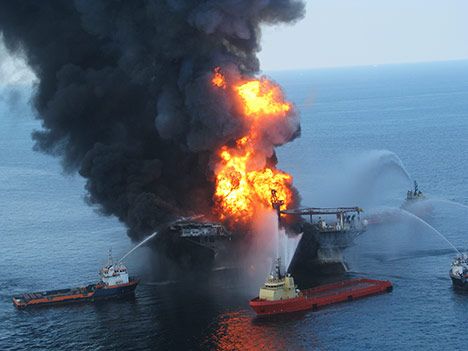
On Jan. 29, 1969, an oil spill involved Union Oil off the coast of Santa Barbara, CA. On March 24, 1989, it was the Exxon Valdez oil spill in Prince William Sound, Alaska. And following an explosion on April 20, 2010, it was the BP oil spill in the Gulf of Mexico.
Dr. Peter Drucker’s quote, “Arrogance is being proud of ignorance,” obviously was not intended for the most-recent public relations debacle facing BP, but it sure is applicable. The results are a case study for worst-practices in crisis management.
BP has inadvertently created a PR situation synonymous with herding cats. It’s been fighting to clear up two quagmires – its oil mess and its rapidly deteriorating image.
It’s important to understand the need for a comprehensive risk analysis. First impressions demonstrating empathy and competence are vital. It didn’t appear BP was prepared to successfully deal with such a catastrophe. A good old-fashioned SWOT analysis of strengths, weaknesses, opportunities and threats with worst-cases scenarios would have sufficed.
For possible insights into BP’s corporate mindset, a former CEO of Royal Dutch/Shell’s U.S. subsidiary, Shell Oil, has some illuminating realities. In the strategy+business management magazine, CEO John Hofmeister’s article, “Why We Hate the Oil Companies,” explains how some corporate oil CEOs dysfunction. He indicates they earn their reputations for arrogance and blow opportunities to create the right image.
“Retailing fuels is basically a secondary exercise from the oil company’s point of view, a way to get rid of the product it has spent so much time and money producing,” he writes. “This makes the retail side the least valuable part of the business, more often a nuisance than a value creator.”
BP’s “Beyond Petroleum” branding has not helped.
Since the spill occurred, despite BP’s best efforts, the company has not been front and center of the media. And when it has been in the media, it’s not a pretty picture, such as offering $5,000 to potential plaintiffs not to litigate in anticipated lawsuits. Nor has BP been seen as compassionate and aware of their social responsibility. Nor has it appeared eager to roll up the proverbial sleeves to work with government to minimize the ecological damage.
In responding to a question about BP’s safety record in an interview with ABC’s George Stephanopoulos, BP CEO Tony Hayward said:
“I think we’ve made enormous strides as a company in the last three or four years with a remorseless focus on safe, reliable operations. Ah, this wasn’t our accident. This was a drilling rig operated by another company. It was their people, their systems, their processes. We are responsible not for the accident but we are responsible for the oil, dealing with it and cleaning the situation up.”
However, here are my recommendations:
- He should have been mindful of all his operations. In the middle of the disaster recovery efforts soon after his interview on ABC, another negative headline was published: “Washington state fines BP $69K for violations.”
- His initial comment should have been a strong note of empathy regarding the need for due diligence in safety.
BP’s Web site mentioning a minimal number of advisories per day with links to Twitter and Facebook are insufficient. Why?
This is a war – a war to save the environment, the livelihoods of families depending on fishing, and the company’s reputation. Where are the pictures of a hardworking CEO, in oil-stained work gear, directing crews like Gen. George Patton in World War II? Where are images of him conferring in teamwork-style with government representatives?
Furthermore, published revelations in this typical headline, “U.S. exempted BP rig from impact study,” looks terrible for BP and a federal agency. The article indicates BP lobbied for an exemption in order to avoid an environmental impact analysis. The waiver was reportedly rubber-stamped by the Minerals Management Service of the Interior Department.
The Obama Administration has also received criticism for its initial tepid handling of the accident, including this commentary: Government scholar Paul Light calls on Secretary Napolitano to step down.
To minimize the damage, BP should have immediately accomplished five tasks:
- Issue regular, frequent progress reports
- Control the pictures (even some on the Web site appeared to be canned or generic)
- Transparency
- Display empathy as a concerned corporate entity comprised of authentic people diligently making a good-faith effort to solve the problem
- Stopped lobbying for environmental waivers.
To be sure, this is no way to run a railroad – or an oil company or government claiming to have environmental credentials. Aren’t there classes on how to be environmentally conscientious, take safety precautions, or perform best-practices in crisis management?
From the Coach’s Corner, for any company following a disaster, here’s a column to enable business continuity: “19 Tips to Protect Your Core Assets from a Disaster.”
Step-by-Step Solutions for a Company Turnaround
If you’re struggling like many businesses, you know the myriad of challenges exacerbated by the economy. However, despite the challenges, it is possible for businesses to successfully complete a financial turnaround.
First, you might have to put on a different set of glasses – see this economy as a marvelous opportunity.
But it’s not just a matter of increasing sales. There’s more to it. Sometimes, I get inspiration from non-businesspeople like the most revered president in American history, Abraham Lincoln: “If I only had an hour to chop down a tree, I would spend the first 45 minutes sharpening my axe.”
To sharpen your axe, there are salient areas that need your focus in order to turn your business around, which include financial, marketing, and internal operations. For space limitations in this column, let’s deal with finances.
Businesspeople are embarrassed by having to face the trauma of continuous collection calls. They often don’t communicate effectively with creditors on managing cash flow issues. So tell creditors you’re working to correct the situation.
The first objective is to manage cash flow in three steps:
- Increase the cash balance. Collect the outstanding accounts receivable and generate cash from any saleable assets.
- Prioritize the cash disbursements. Focus the available cash toward the must-pay expenses first, including payroll and associated payroll taxes, and pay other vendors with your remaining balance.
- Develop a cash forecast. Project realistic cash receipts by customer (preferably include the products or product lines) and disbursements by creditor on a weekly basis for the three months – and monthly thereafter for a year. This means reducing the revenue and collections in your projection by 10 to 30 percent to make certain the actual results are achievable and you do not run out of cash. Develop and implement plans to operate and keep you in business at the lower projections.
Denial is usually the biggest consequence: Acknowledge your situation, develop a turnaround plan, and communicate with your bank, with vendors, and your employees.
Once you acknowledge the situation, consider your company’s mission statement, define the core business, including your target customers, and your company’s unique competencies in the marketplace. The bottom-line question – are your products or services responsive to the market demand?
Next, determine your company’s strengths, weaknesses, opportunities and threats with a SWOT analysis.
If you owe money to banks or vendors, most would rather be repaid over time than take over your business or force your company into bankruptcy, provided you can show them how they will benefit by working with you.
For your lenders, provide your operational and financial turnaround plan exhibiting the company’s viability and outlining a repayment plan and timetable for the bank and explain how you intend to protect the bank’s collateral. You may have to show your lender how they will receive less money if they force you to liquidate to repay your line of credit if they don’t extend the repayment terms of your loan.
In dealing material suppliers, offer to pay them cash on delivery on future shipments so that they can continue to earn their gross margin on your purchases and suggest that you will also pay a small percentage toward their prior outstanding balance. Your vendor will keep you as a profitable customer and their outstanding receivables will be reduced over time.
For creditors, keep your commitments on making payments to re-establish credibility.
Continue to monitor your company’s financial health. Identify your company’s key performance indicators, or critical success factors. These indicators must be SMART, an acronym for specific, measurable, achievable, relevant and track-able. They typically relate to sales to key customers, accounts receivable collections, cash balance, raw material deliveries, and sales backlog.
A flash report can be designed to monitor these indicators on a daily basis and to evaluate your actual performance against the turnaround plan. It should be shared with key players in your company so everyone understands and has a sense of ownership so that you have a team-approach in achieving your goals.
The textbook I use in teaching finance to non-accountants is “Finance for Non-Financial Managers” by Gene Siciliano, http://www.cfoforrent.com/publications/Books/finance-for-non-financial-managers.htm.
Use these tips and you’ll increase your odds for a good return on your marketing investments.
From the Coach’s Corner, here’s a quick tip on sharpening your axe in customer service:
Use the Golden Rule. How many times have you said you’re tired of spending money at companies who have employees who take your money and say “Have a nice day,” but fail to smile and say “Thank you”?
Or they seem indifferent toward you? My research shows that consumers stop buying from a business about 70 percent of the time because they feel they feel taken for granted. Customers will go elsewhere and not bother to complain about the lack of respect.
So if you have customer-service employees and your profits are down, you can bet your company needs to improve team morale and customer empathy.