Manufacturing Jobs Might Return to U.S. as China’s Labor Costs Rise
June 13, 2011
Will federal, state and local governments change public policy to take advantage of a development in China?
A recent study by a world-class consulting firm offers hope to regions in the United States beleaguered by high unemployment – the firm predicts labor issues in China mean U.S. firms will be less-inclined to offshore jobs.
As some U.S. states develop reputations as low-cost manufacturing centers and China’s wages increase, offshoring of jobs is expected to decline in five years, according to an international consulting firm. That’s the essence of a study by The Boston Consulting Group (BCG).
The firm’s report: “Made in the USA, Again: Manufacturing Is Expected to Return to America as China’s Rising Labor Costs Erase Most Savings from Offshoring.”
As usual, BCG offers enlightening insights.
“With Chinese wages rising at about 17 percent per year and the value of the yuan continuing to increase, the gap between U.S. and Chinese wages is narrowing rapidly,” said the firm’s press release. “Meanwhile, flexible work rules and a host of government incentives are making many states—including Mississippi, South Carolina, and Alabama—increasingly competitive as low-cost bases for supplying the U.S. market.”
That’s thanks to a labor-shortage issue.
“All over China, wages are climbing at 15 to 20 percent a year because of the supply-and-demand imbalance for skilled labor,” said Harold L. Sirkin, a BCG senior partner. “We expect net labor costs for manufacturing in China and the U.S. to converge by around 2015. As a result of the changing economics, you’re going to see a lot more products ‘Made in the USA’ in the next five years.”
It’s a complex issue, but BCG further explained the rationale.
“After adjustments are made to account for American workers’ relatively higher productivity, wage rates in Chinese cities such as Shanghai and Tianjin are expected to be about only 30 percent cheaper than rates in low-cost U.S. states,” stated the press release. “And since wage rates account for 20 to 30 percent of a product’s total cost, manufacturing in China will be only 10 to 15 percent cheaper than in the U.S.—even before inventory and shipping costs are considered.”
Cost advantages in China will lessen
“Products that require less labor and are churned out in modest volumes, such as household appliances and construction equipment, are most likely to shift to U.S. production,” according to BCG’s Web site. “Goods that are labor-intensive and produced in high volumes, such as textiles, apparel, and TVs, will likely continue to be made overseas.”
Sirkin, who authored “GLOBALITY: Competing with Everyone from Everywhere for Everything,” advised U.S companies to examine all the labor costs.
“They’re increasingly likely to get a good wage deal and substantial incentives in the U.S., so the cost advantage of China might not be large enough to bother—and that’s before taking into account the added expense, time, and complexity of logistics,” said Sirkin.
BCG said the reversal has started.
“Caterpillar Inc., for example, announced last year the expansion of its U.S. operations with the construction of a new 600,000-square-foot hydraulic excavator manufacturing facility in Victoria, Texas,” the press statement indicated. “Once fully operational, the plant is expected to employ more than 500 people and will triple the company’s U.S.-based excavator capacity.”
Caterpillar acknowledged why.
“Victoria’s proximity to our supply base, access to ports and other transportation, as well as the positive business climate in Texas made this the ideal site for this project,” said Gary Stampanato, a Caterpillar vice president.
Two other companies change course
“NCR Corp. announced in late 2009 that it was bringing back production of its ATMs to Columbus, Georgia, in order to decrease the time to market, increase internal collaboration, and lower operating costs,” said the consulting firm. “And toy manufacturer Wham-O Inc. last year returned 50 percent of its Frisbee production and its Hula Hoop production from China and Mexico to the U.S.”
U.S. unions, of course, have been an obstacle.
“Workers and unions are more willing to accept concessions to bring jobs back to the U.S.,” noted Michael Zinser, a BCG partner who leads the firm’s manufacturing work in the Americas. “Support from state and local governments can tip the balance.”
Mr. Zinser said U.S. executives need to look a bigger wage-cost picture.
“If you’re just comparing average wages in China against those in the United States, you’re looking at the problem in the wrong way,” Zinser cautioned. “Average wages don’t reflect the real decisions that companies have to make. Averages are historical and based on the country as a whole, not on where you would go today.”
Another factor is labor shortage.
“In the U.S., we have highly skilled workers in many of our lower-cost states. By contrast, in the lower-cost regions in China it’s actually very hard to find the skilled workers you need to run an effective plant,” added Doug Hohner, another BCG partner who focuses on manufacturing.
China will continue as a major player in manufacturing U.S. products, but Mr. Hohner offers these forecasts:
- First, investments to supply the huge domestic market in that nation will continue.
- Second, in the absence of trade barriers that prevent offshoring, Western Europe will continue to rely on China’s relatively lower labor rates since the region lacks the flexibility in wages and benefits that the U.S. enjoys.
- Third, even though other low-cost countries—such as Vietnam, Thailand, and Indonesia—will benefit from companies seeking wage rates that are lower than China’s, only a portion of the demand for manufacturing will shift from China. Smaller low-cost countries simply lack the supply chain, infrastructure, and labor skills to absorb all of it.
Public policy
My sense is the big question is whether government will start doing the right thing in public policy? Oops, that goes for unions, too, and the ostensible political motivations of the National Labor Relations Board (NLRB).
A brouhaha comes to mind – the issues over Boeing launching a manufacturing plant in South Carolina. For years, state government and union political activity gave the aerospace giant no option, but to look for a better locale-alternatives to build the 787 Dreamliner.
An editorial in a Tacoma, WA newspaper, The News Tribune, made a salient comment: “The NLRB complaint – which alleges that Boeing retaliated against its workers for striking when it choose to expand in South Carolina rather than Washington – appears to be little more than an attempt to assuage battered union interests.” (The right way to win Boeing jobs for Washington state)
In a similar editorial, NLRB complaint against Boeing needs critical look, The Seattle Times cited President Obama’s rhetoric about generating jobs.
“Really a president does not create manufacturing jobs. He creates policies that may encourage companies to create jobs — companies like Boeing, which has now had the creation of 1,000 jobs in South Carolina second-guessed by Obama’s National Labor Relations Board,” wrote the editorial writers.
“In its complaint, the NLRB is attempting to reverse a U.S. investment by the nation’s No. 1 exporter 17 months after the company decided to make it — after the money has been spent, after the equipment is set up and after 1,000 workers have been hired. In South Carolina, assembly of the first 787 is scheduled to begin this summer. For the government to demand now that the company move everything to another state shows no sense of practical reality,” the newspaper asserted.
Agreed.
Let’s hope BCG is right and the manufacturing jobs return. But more than political rhetoric, we need competence in government. If the right public policies are implemented, political and economic liberties will improve for everyone – not just the unions’ leadership.
To visit the BCG Web site: www.bcg.com
From the Coach’s Corner, here are related public-policy columns:
Job Creation: Will Public Officials Listen to Intel’s CEO?
Solutions for 3 Dangers to Small Business, Travelers’ White Paper
Common Sense for Washington State Pension Reform
“I don’t make jokes. I just watch the government and report the facts.”
-Will Rogers
_________
Columnist Terry Corbell is also a business-performance consultant and profit professional. Click here to see his management services (many are available online). For a complementary chat about your business situation or to schedule Terry Corbell as a speaker, why don’t you contact him today?
Northwest Partnership Leads to Solutions for High Jet Fuel Costs
In news coverage about the airline industry, there are countless worldwide news reports about the plight of most airlines suffering from high fuel costs. A typical headline – Airlines React to Rising Fuel Costs by Cutting Service and Flights.
So, it’s about airline jobs, and commerce – enhanced aviation service for businesspeople and consumers. Fuel expenses constitute as much as 30 percent of an airline’s operational costs.
But an aviation biofuel industry is taking hold in the Pacific Northwest, thanks to a partnership called Sustainable Aviation Fuels Northwest (SAFN), which produced results from a 10-month study in May, 2011. In effect, the report is a SWOT analysis for developing public policy and biofuels for the airline industry.
The study’s partners: Boeing (NYSE: BA), Alaska Airlines (NYSE: ALK), Portland International Airport, Seattle-Tacoma International Airport, Spokane International Airport and Washington State University.
“It is critical to the future of aviation that we develop a sustainable supply of aviation biofuels,” said Boeing Commercial Airplanes President and CEO Jim Albaugh. “Airlines are particularly vulnerable to oil price volatility, and the aviation community must address this issue to maintain economic growth and further mitigate the environmental impacts of our industry.”
So how will it be possible?
“The Pacific Northwest has the diverse feedstocks, fuel-delivery infrastructure and political will needed to create a viable biofuels industry capable of reducing greenhouse gases and meeting the future fuel demands of the aviation industry,” states the SAFN’s press release . “Creating an aviation biofuels industry, however, will depend upon securing early government policy support to prioritize the aviation industry in U.S. biofuel development.”
SAFN indicates a biofuels industry for aviation is the next logical step.
“Alaska Airlines has made significant strides in reducing its environmental impact by enhancing the efficiency of its operations, including using satellite-based flying technology and investing in the most fuel-efficient airplanes in their class – but efficiency is only part of the answer,” said Alaska Air Group Chairman and CEO Bill Ayer.
“In order for the aviation sector to continue its impressive record of fuel efficiency and emissions reduction while continuing to grow, it is important that a sustainable supply of aviation biofuels is developed,” added Mr. Ayer.
SAFN explains how it can be accomplished.
“To make a sustainable biofuels industry a reality, the study outlines an integrated approach recommending the use of many diverse feedstock and technology pathways, including oilseeds, forest residues, solid waste and algae,” according the SAFN press statement.” In addition, the study outlines the long-term importance of securing aviation biofuels as a top government priority and using the aviation industry to drive growth in domestic production.”
The SAFN study encompassed the full gamut from biomass production to airline usage.
“However, as with any new energy supply, political support at the state and federal level is critical in the early stages of development,” cautioned the press release. “While the study does not advocate for permanent government support, it recognizes that focused public investments and parity with other biofuels programs will be needed to place the industry on an economically competitive basis.”
Port of Portland is one of the three Northwest airports that are participating in SAFN.
“The Northwest is uniquely positioned to serve as a blueprint for developing a U.S.-based, sustainable aviation biofuels industry,” said Steve Schreiber, Port of Portland aviation director.
The Port of Seattle says biofuels for aviation are an environmental solution.
“Airports have been leaders for years in finding ways to reduce their environmental footprint, from clean fuel sources for taxis and shuttles to electrification of ground equipment and pre-conditioned air, but in order to take the next big step we have to address emissions from aircraft,” said Bill Bryant, Port of Seattle commission president.
“We can’t get there without biofuels. It not only will help the sustainability of the Northwest but also the aviation industry,” he asserted.
Spokane International Airport says biofuels is important for competitiveness.
“We can no longer base our future on imported petroleum, especially if the United States wants to remain an aviation leader,” said Lawrence J. Krauter, chief executive officer, Spokane International Airport. “The SAFN study proves domestic biofuels are feasible and offers an economic opportunity for us to remain competitive as an industry and move toward a sustainable, domestic fuel supply.”
Washington State University makes a prediction.
“WSU will combine our world-class biofuel and agricultural researchers along with significant institutional assets to leverage the Northwest’s abundance of agricultural and natural resources necessary to create a dynamic new aviation fuels industry,” said Dr. John Gardner, vice president for Advancement and External Affairs at Washington State University.
“The long-term payback will be a stateside industry that greatly enhances our traditional economic strengths; from farming and forestry to engineering and aerospace, creating new opportunities and new jobs for the Northwest,” added Dr. Gardner.
SAFN originated in 2010 with more than 40 partners.
My sense:
Congratulations to SAFN stakeholders. No one wants to inflate the Washington state or federal budget. But surely with this study, we’re half way to more environmental and fuel-efficient solutions.
Who knows? Boeing will sell more jets. Alaska Airlines will become even more successful. WSU will enhance its already terrific reputation. And the regional airports will get even better.
Besides, a biofuel proposal that includes the productive use of algae? Terrific. I don’t know about you, but my allergies might disappear.
Fly, fly, fly away!
From the Coach’s Corner, here’s more on SAFN: www.safnw.com.
“Where there is an open mind there will always be a frontier.”
-Charles F. Kettering
_________
Terry Corbell is a business-performance consultant and profit professional. Click here to see his management services (many are available online). For a complementary chat about your business situation or to schedule Terry Corbell as a speaker, why don’t you contact him today?
Economic Climate for Small Business – Has Obama Misread the 3 Ms?
Sept. 8, 2010
Using the 3 Ms as criterion, it’s report card time for the “summer of recovery,” as predicted by President Obama last June. From the perspective of most small businesspeople, the three Ms can be defined as the mandate, moment and mood. Based on his strategies, has Mr. Obama misread his 3 Ms?
Clearly, after President Obama’s election nearly two years ago, the nation appears uncomfortable with his strategies for hope and change. There are worries about the economy and dissatisfaction with the nation’s leadership coupled with a huge lack of confidence – Americans see too little action – too late.
Consider President Obama’s recent Gallup Poll ratings:
- Job approval – 42 percent (only 39 percent among Independents)
- Economy – 38 percent approval rating
- Obama on Healthcare reform – 39 percent approval.
- Country – right direction – 32 percent say yes.
Why such bleak approval ratings? Well, when it comes to Main Street, the Obama Administration has a tin ear.
Bailouts, heavy spending, healthcare overhaul, and cap-and-trade legislation have been the misguided priorities for the Obama Administration. He has not been confused with President Lincoln. As a result, Mr. Obama has been off-target with assessing strengths, weaknesses, opportunities and threats. He has accomplished little regarding the economy and job creation, as the 9.6 percent unemployment rate is poised to climb higher.
His message is also off-base – really missing the target. The nation’s confidence is sinking. He needs to understand why President Roosevelt was widely respected during the depression years.
Admittedly, his proposed tax breaks are welcome – accelerated write-offs for investments in plants and equipment – and tax credits for research. Companies could deduct investment expense in one year instead of the current provision for three to 20 years. But they will not yield a quick fix for struggling businesses.
The tax breaks should have been proposed 20 months ago – businesses do not have an incentive to take risks, and they will not add to their payrolls. Even for a beleaguered construction industry, Mr. Obama’s proposed $50 billion spending for roads, railways and runways is seen as a political payoff to unions.
Government policy should be focused on alleviating uncertainty for employers – not creating chaos. For businesses to increase spending, it starts with confidence. So, they’re not likely to buy machinery or high-tech, which would create jobs.
Big companies can borrow at lower interest rates. Even though small businesses comprise the lion’s share of the nation’s economic engine for job creation, most small businesspeople feel as though government has declared war on them. Many have suffered severely and have lost their positive credit ratings – making it impossible for them to borrow at decent rates. That’s a shame.
Small Business Administration (SBA) figures show small companies represent 99.7 percent of all employers, and employ more than 50 percent of the private-sector workforce. The SBA says account for 44 percent of payrolls, and more than 50 percent of the nation’s non-farm gross domestic product. They comprise 97.3 percent of exporters, and are responsible for 13 times more patents per employee than big companies. But the patent-application process takes more than half a decade (see this column: “Is the U.S. in Danger of Becoming Second-Rate in High Tech?”)
Just like during the Bush Administration, the SBA in the Obama tenure has decimated government-contract opportunities for small businesses. Twenty-three percent of all federal government contracts must be allocated to small businesses. This year, the Obama Administration admitted it failed to achieve the goal, even though it claims to have given $96.8 billion in government contracts to small business. Or did it? No.
A study released in June by the American Small Business League (ASBL) concludes that a whopping 60 percent of the top 100 contracts resulted in welfare for big companies.
To name names: Boeing, British Aerospace, Dell, General Electric, Honeywell International, Lockheed Martin and Raytheon all received corporate welfare – government contracts intended for small entrepreneurs.
Small businesses are getting a raw deal in other ways. Consumers have been so hammered, they can’t buy goods and services – even if they want to do so. Financial reform did nothing to help consumers and small businesses long pillaged by predatory credit card companies. New cars and trucks continue to be parked at dealerships.
Because this isn’t a nurturing economic climate, there’s also been a decrease in self-employed businesspeople. Recent Labor Department figures show there are 8.68 million self-employed persons. That’s down 13 percent from four years ago, December 2006, when there were 9.98 million people working for themselves.
It’s small business that creates jobs in this era of corporate-bailout largesse. However, small businesses are being choked because they can’t get credit and they’re facing a slump in demand.
They’re also facing a health reform law that favors bigger companies. Other government-forced paperwork will increase. Plus, every company must produce a Form 1099 to each vendor when annual purchases total more than $600. The SBA says employers with 20 or less workers now have to spend 45 percent more of their hard-earned resources to stay in compliance with federal mandates. IRS audit hours for small firms are up 30 percent in just five years. You guessed it – audit hours for their big-company peers are down by a third over the same period.
Summer of recovery? No. Every economic report has delivered bad news. President Obama has misread his 3 Ms.
The bottom-line: Small businesses want a healthy economy. They want to hire workers when feasible. But they do not feel expansion of government, high taxes and new regulations will help them succeed.
Small-business success is our best hope. Public policy should reflect this reality. Mr. Obama should emulate President Lincoln in deciding policies, and Franklin Roosevelt for delivery of the right message to inspire confidence.
From the Coach’s Corner, from a more macro perspective, it’s also been alarming to watch American officials scold the Germans for not spending enough. But it’s Germany with the healthiest economy in Europe.
An article in Forbes explains it well: “The U.S. Killed The Summer Of Recovery – We did it by framing the wrong problem,” by scholar Thomas F. Cooley.
Strategic Planning Lessons: Why United Airlines Was Forced to Merge with Continental
Dec. 7, 2011
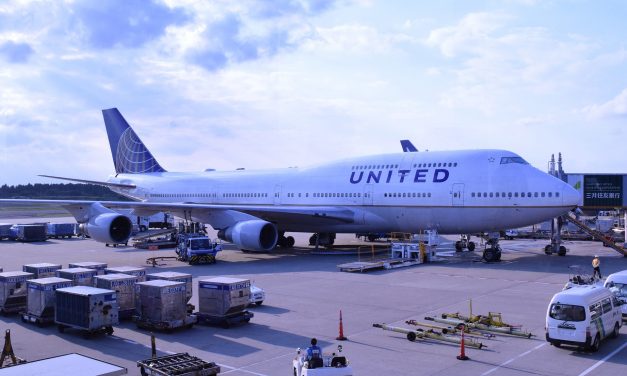
United Airlines (UAL) was forced to merge with Continental Airlines because of anemic strategic planning.
It’s a $3 billion merger with about 1,200 jets and more than 86,000 workers.
Sadly, after eight decades, UAL’s logo is history. The Continental logo remains.
The merger has meant a mega review of 2,000 policies and procedures.
UAL’s loading procedure prevailed. Window passengers seated first, and aisle passengers seated last. To UAL’s credit, this makes for the fastest-possible boarding time.
Its policy for loading pets will remain – they will be loaded onto the jets tail-first. Amen.
But starting with the new branding slogan, “Let’s Fly Together,” one has to wonder if the new airline will get it right. The slogan does not convey a fun experience with value and safety.
When the student is ready, the teacher appears. In a dubious way, management at UAL is our teacher in strategic planning.
History of good planning?
In 2002, I wrote an uncomplimentary commentary about UAL’s management. UAL’s bankruptcy filing was a major concern to businesses, investors and workers. It was the largest airline bankruptcy in the nation’s history. UAL comprised about 10 percent of Boeing Capital’s $11.5 billion loan portfolio as a result of jet deliveries to UAL.
Boeing’s move to Chicago, which is also UAL’s home, made it easier for the manufacturer to monitor bankruptcy proceedings and to persuade the airline to make good on its financial commitments. My sense was that other reasons included the attitude of labor, the Washington State Legislature’s approach to business and the need to be close to money markets and be more centrally located for stakeholders.
In May 2005, UAL’s plan to terminate employee pensions – the largest corporate pension default in U.S. history – was approved by the bankruptcy judge. UAL managed to dump its pension obligations on the Pension Benefit Guaranty Corporation (PBGC).
In Oct. 2005, the airline got a $3 billion loan from JPMorgan Chase & Co. and Citigroup Inc., and emerged from bankruptcy in Feb. 2006.
Poor ESOP model
In the wake of UAL’s financial collapse, it might have seemed logical to rebuke employee-owned companies, or employee stock ownership plans. UAL’s failure was not a reflection of ESOPs but it provided lessons in developing a productive business model and operating a complex enterprise. After all, there are more than 11,000 successful employee-owned companies throughout the nation.
The ESOP concept evolved when it was theorized that company employees are more productive when they feel a sense of ownership. But UAL’s ESOP was established for the wrong reasons in 1994.
You might recall the acrimony at UAL when the CEO, Stephen Wolf, threatened to break up the airline and outsource maintenance projects. Instead, Mr. Wolf was given $30 million to walk away as the unions embarked on their plan to save thousands of jobs.
UAL essentially became an employee-owned company, 55 percent of the shares, in 1994. Employees gave up some $700 million in wages and conceded some work rules. In exchange, the workers bought out the boss and stockholders.
The TV ads were glitzy and impressive as UAL’s stock ultimately soared above $100 a share in 1997. Then it happened: The concept was failing and UAL’s TV ads touting the airline as an employee-owned company disappeared from the airwaves. The sky-high stock price began to descend.
Published reports in 2002 indicated union members needed to conduct a reality check about their misdirected anger – they blamed the Air Transportation Stabilization Board for refusing to make a $1.8 billion loan to UAL.
There are good reasons why UAL’s ESOP failed to blossom and the bud fell off the rose. It wasn’t because of 9/11, or because the airline was refused the government bailout. Simply put, harmony and healthy participatory management are needed for ESOP success. UAL’s ESOP proved to be an anomaly – management and employees were not united.
Strategic-planning lessons
Of the 14 major airlines before 1978, only six remained in 2002. Like the 120 carriers that have failed in recent decades, UAL failed because of an unproductive business model:
Infrastructure. Bigger isn’t always better. In 2002, UAL was the second-largest carrier behind American Airlines. It dropped to fourth in passengers flown. UAL had unsuccessfully operated hubs in Washington D.C., Chicago, Denver, San Francisco, and Los Angeles. A modified hub system with more direct flights would have been less costly to operate.
Uniformity. It only seems logical and cost-effective to operate a single aircraft brand for the majority of operations instead of a hodgepodge of planes. There are usually rewards for being loyal to vendors, including cost savings in purchases of jets and parts, as well as maintenance and operation simplification with one aircraft line instead of multiple aircraft makes.
Finally in 2009, UAL began negotiating with Airbus and Boeing for the purchase of 150 fuel-efficient planes to replace part of its aging fleet. Given its balance sheet, it was anticipated that UAL would depend heavily on the manufacturers for financing.
Did UAL finally learn that it will have more leverage if it limits its purchases to one manufacturer? No. UAL bought from both Boeing and Airbus.
Market conditions. Yes, airlines have had a tough time, especially because of fuel prices and passenger demand. But profitable airlines have consistently utilized economic principles, such as a no-frills approach, while UAL failed to adapt in losing $8 million a day. UAL lost $2.1 billion in 2001 and $1.74 billion for the first nine months of 2002.
UAL’s losses continued throughout the decade. For example, it lost $792 million in Q3 2008. In 2009, UAL failed to capitalize on plunging fuel prices. Its 2009 Q3 fuel bill decreased almost 57 percent or 1.1 $1.1 billion, but the airline lost $57 million.
Contrast UAL with Alaska Airlines, which netted $13.1 million in Q1 2010, and that’s typically its weakest-earning quarter each year. Alaska ranks well in on-time performance.
Failure to keep arms length from employees. With adversarial union leaders represented at the board level, it was impossible to keep labor costs at a realistic level.
Corporate welfare. In 2002, I pointed out this disturbing incident: Behind the scenes, the Air Transportation Stabilization Board had allowed accountants from competing carriers to examine UAL’s financials. They pointed out numerous flaws; consequently, the board gave the carrier several opportunities to revise its deficient business plan. UAL failed to do so.
Again, the company dumped its underfunded pension obligations on the PBGC. CEO Glenn Tilton kept his $4.5 million pension and is paid$10.3 million a year – considerably more than his peer airline CEOs.
Management. With due respect, Mr. Tilton was hired to save the company without sufficient airline experience. He was recruited from the oil industry. Plus, it takes a strong, non-confrontational administrator to cope with such challenges, and his team wasn’t strong enough to offset his weak points.
It’s also unfortunate that Mr. Tilton failed to avoid nearly $400 million in losses on fuel hedges in recent years – despite his decades of experience in oil.
And consider UAL’s rankings in The Air Travel Consumer Report in 2008 by the Department of Transportation’s Office of Aviation Enforcement and Proceedings:
- On-Time Arrivals: Near the bottom with 27.2 percent of its flights delayed.
- Complaints: The worst.
- Baggage Mishandling: United ranked 9th out of 19 places for baggage mishandling.
To view the report, click here.
In Sept. 2011, UAL still didn’t rank well in on time flights – ranked third in flight delays at an average of 84 minutes per delay, according to Air Travel Consumer Reports for 2011.
In terms of strategic planning, UAL has not flown high, but had started to show some signs of corporate wisdom.
UAL started the process of improving its infrastructure. For example, it laid-off 36 employees at Manchester-Boston Regional Airport, and cut capacity in half because its two flights to Chicago’s O’Hare airport have been replaced by United Express and its smaller aircraft. This was part of UAL’s plan to cut its overall capacity by 10 percent.
Failure to honor tradition
Regarding the purchase of new planes, tradition and relationships should have been considered by the airline. Yes, UAL operates outside the U.S., too, with flights to Asia, Europe and Latin America with 3,300 flights to more than 200 destinations.
But my sense is UAL should have only gone with Boeing for three basic reasons:
- In recognition of its Boeing roots starting eight decades ago
- Boeing’s past goodwill in service
- Boeing’s risk-taking in extending more than $1 billion in financing to the carrier
And in customer service, UAL could learn from Alaska Airlines. I’ve flown both and there is no comparison. Connecting flights and poor customer service are a nightmare. My business associates have made similar unsolicited comments.
The new airline has a long way to travel if it’s going to successful.
From the Coach’s Corner, here are more resource links:
For more analysis regarding airline strategic planning:
Northwest Partnership Leads to Solutions for High Jet Fuel Costs
Boeing, Airbus Rivalry: Lessons in Strategic Planning.
“If black boxes survive air crashes, why don’t they make the whole plane out of that stuff?”
-George Carlin
__________
Terry Corbell is a business-performance consultant and profit professional. Click here to see his management services (many are available online). For a complementary chat about your business situation or to schedule Terry Corbell as a speaker, why don’t you contact him today?
Boeing, Airbus Rivalry – Lessons in Strategic Planning
Updated June 30, 2010
A major ruling against Airbus by the World Trade Organization (WTO) adds new intrigue to the Boeing-Airbus competition. The WTO ruled that Airbus has received illegal subsidies for four decades. Litigation has been ongoing for six years.
But Airbus vows to fight the ruling as it tries to land even more government funding from the European Union for its new A350 jet, which will compete against Boeing’s 777 and 787. Airbus also predicts Boeing will receive a similar adverse ruling from the WTO this summer.
So the plot in the rivalry continues to thicken. Businesses can learn valuable lessons from the Boeing-Airbus competition. In terms of strategic planning, it has been quite a roller-coaster ride with no end in sight.
Have both sides done enough strategic homework? Should major manufacturers rely on government funding?
Here’s some more history to consider:
In July, 2006, I recall writing a column suggesting that Boeing should not break out the champagne to celebrate even though Airbus was faltering. My sense was that investors would have been impressed if Boeing employees continued to act with poise and assurance – as though they expected to win sales orders – unlike many of the flamboyant Airbus stakeholders. Their behavior was reminiscent of immature athletes taunting opponents on a football field.
Airbus sales had dropped by more than 50 percent during the first six months of 2006 compared to 2007. The company was behind schedule in landing more than 250 sales, which were needed to capitalize on its $13 billion design and production investment.
Airbus was reeling from a buyers’ strike for several reasons:
- Delivery delays in the A-380, a super jumbo jet
- A class-action lawsuit and the threat of more litigation accusing management of hiding problems
- Astronomical fuel costs
- In-fighting by French and German executives at the parent company, EADS
- A management shakeup at Airbus
All these developments occurred before the deadly Airbus A-310 accident in Russia that killed the crew and scores of passengers. Yes, Airbus appeared rather vulnerable.
Since the 2006 column, the cost of jet fuel and the worldwide recession took a toll on air travel and cargo services, which adversely affected both airline manufacturers.
For example, Dubai-based Emirates airline stopped its using its Airbus 380s on flights to New York and replaced them with the smaller Boeing 777.
Meanwhile, Boeing lost its sales throne in suffering from fewer orders while still pinning its hopes on its new 787. But the Dreamliner’s production has been postponed five times. The first delivery is now forecast for Q4 in 2010 – at best, a two-year delay for the aircraft. In other words, it is the most-expensive and delayed aircraft in Boeing’s rich history.
Other Boeing challenges:
- The estimated $35 billion Air Force tanker-bid process after initially losing to Airbus
- Allegations of illegal subsidies on both sides before the World Trade Organization
- Whether to locate a second 787 assembly line outside of Washington state
- Progress of the 747-8 jumbo jet
- Production cuts because airlines are postponing jet deliveries, cutting back on new purchases and canceling orders
On the other hand, Boeing originally strategized that its highly efficient 787 Dreamliner would prove to be popular with airlines. Airbus apparently didn’t factor whether airports worldwide would want to construct longer runways for landings and takeoffs to accommodate its huge A-380. Not to mention the increasing costs for jet fuel.
Add to the competitive mix – Aviation Industry Corp. of China (AVIC) – a competitor for Airbus and Boeing. AVIC is restructuring again as a single company. It will be listed on the Hong Kong stock exchange with about $22 billion in assets. As China’s largest aircraft manufacturer, it also has one-fifth of Comac, Commercial Aircraft Corp. of China. In 2016, Comac plans a 150-seat jet for the marketplace.
So, it would be intriguing to peek at the strategic plans of Boeing and Airbus to see if they did a thorough forecast of all these developments. The positive and negative events illustrate how important it is to thoroughly explore all contingencies. That includes funding. The controversy over government funding has unnecessarily cost both sides valuable resources.
And how can a smaller business capitalize on the Boeing-Airbus case study, and maximize performance with strategic planning?
Strategic planning starts with a SWOT analysis: Analyzing your internal strengths, weaknesses along with your external opportunities and threats.
The basic categories to be evaluated in your internal operation should include:
- Management
- Product/Services
- Customer Service
- Human Resources (including likelihood of employee strikes)
- Marketing
- Operations
- Technology
- Security
- Financial
- Viewpoints of your customers
Externally, you’ll want to assess these factors:
Socio-cultural – including demographic movements, the aging baby-boomer demographic, consumer tastes, population shifts, and the trend toward healthy lifestyles.
Economic developments – consider interest rates, inflation, fluctuations in currencies, and stock market trends.
Technology – including information technology, privacy concerns, production and the Internet.
Politics – issues such as federal, state and local levels in both taxes and regulatory issues.
Industry competition – obviously, you’ll need to develop a strong awareness about your competitors.
Customer profiles – analyze your target customers’ changing characteristics, wants, and needs. Determine what you want to target in average age, income, gender, and marital status. Evaluate their buying preferences and how they feel about your industry.
Once the SWOT analysis has been completed, you can develop and implement your strategic plan.
However, many small business owners and managers fail to properly budget time for strategic planning and they fail to capitalize on the expertise of their employees. After all, employees deal with customers every day.
Involving your employees will improve their character and morale. It will also promote teamwork, which will motivate employees to higher performance. So don’t overlook their experiences and instincts, and be sure to obtain their support.
In fact, every stakeholder – from employees to customers – should be part of the comment process to help develop and implement your action plan. Identify the leaders and best thinkers in your company to help you. It will enable you to plan using your vision with goals for entering new markets and introducing new services or products, and to obtain efficiencies by developing strategies for quality.
Consider other “dos and don’ts” of strategic planning.
Dos:
- Assign a strong personality to administer the process
- Develop benchmarks for performance and results
- Anticipate how the strategic planning changes will affect your employees, processes, and culture
- Publicize the strategic plan early on and regularly
- Monitor the plan’s progress and make changes when necessary
- Reward the positive behavior of supportive employees and take appropriate action against those who fail to participate productively in the process
Don’ts:
- Don’t permit a lackadaisical attitude and employees’ resistance to change
- Don’t allow poor follow-through on initiatives
Finally, do not obsess about looking over your shoulder. Consider the teachings of author/consultant Seena Sharp on competitive intelligence, “Competitive Intelligence Advantage: How to Minimize Risk, Avoid Surprises, and Grow Your Business in a Changing World,” (Wiley and Sons).
She recommends not focusing heavily on your competition. Here’s a link to my column: Hottest Tactics to Beat Your Competitors.
From the Coach’s Corner, for an analysis on the lessons from UAL’s six strategic-planning woes, see: Losses Show Why United Airlines Needs Strategic Plan