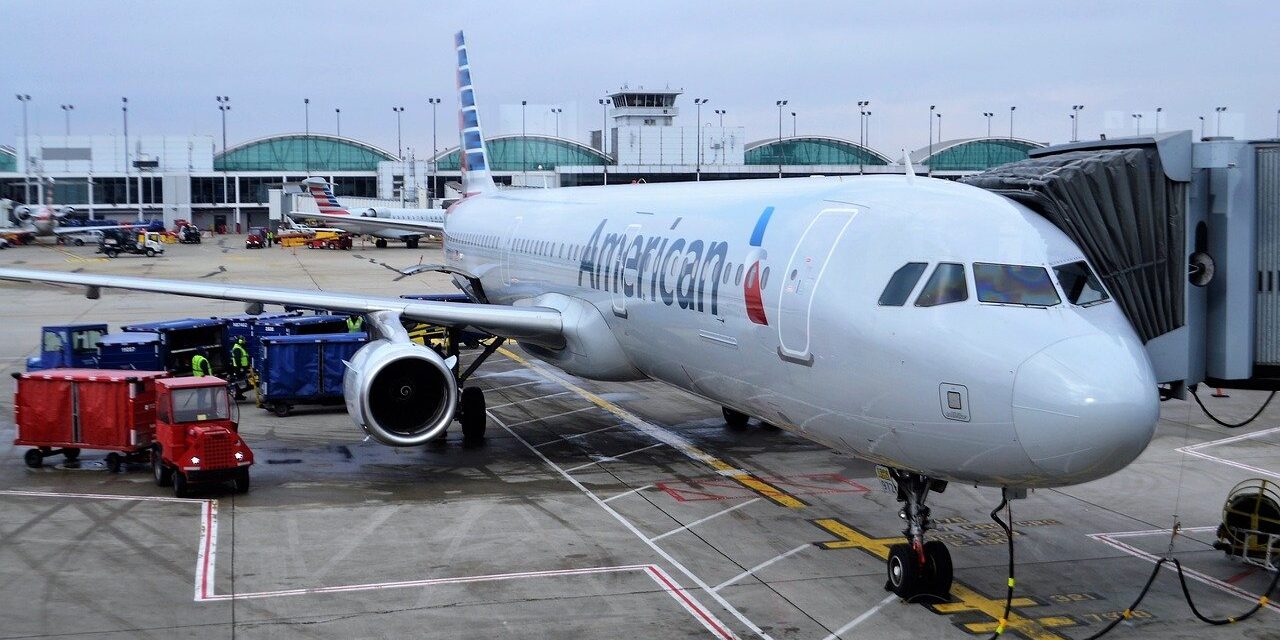
After a long struggle from labor strife, high expenses and bankruptcy — a merger and a comeback
Updated July 26, 2019 –
It’s true as the world’s-largest carrier, American Airlines might have possibly fallen in the rankings behind either United Airlines or Delta this year.
Delta made more $530 million more in revenue in Q2 this year and United had more measurable seat miles.
American is absorbing a $400-million hit from the grounding of 24 Boeing 737 Max jets and having to cancel 115 flights per day. Plus, amidst contract negotiations, its mechanics union is stalling work and it’s at another disadvantage. Its strongest international market is Latin America where Venezuela is in turmoil and Brazil has a weak economy.
In contrast, Delta doesn’t have any Boeing 737 Max jets.
Otherwise, American is still king of the skies when taking into account the number of employees, daily flights, destinations and size of fleet.
With big profits and American Airlines becoming the third airline to be included in the S&P 500, it capped a comeback for the vaunted company.
In a sense, a legendary iconic American company had bitten the dust.
In a bid for sustainability, the American Airlines (AA) $11 billion merger with US Airways made it the world’s-largest carrier.
It’s been a stormy flight for AA.
AA filed bankruptcy Nov. 29, 2011, just five months or so after ordering 460 single-aisle jets from Boeing and Airbus. Meantime, US Airways ordered 76 new Airbus jets.
The merger was immediately forecast to produce revenue and savings of more than $1 billion by 2015. The deal involved more than 900 routes, but only 12 of them overlapped.
AA merger downsides
AA has a long history of labor troubles and the merger presents quandaries in combining two union workforces totaling 96,000 people, as well as blending two information-technology systems and aircraft.
Historically, such mergers aren’t successful. Consider that United’s poor on-time performance continued even after it merged with Continental Airlines.
Before merging, my sense is that none of the airlines took the precaution of consulting experts in human resources.
But, the bankruptcy filing by AA’s parent company, AMR Corp., was an example of proper business planning to alleviate uncertainty. All struggling businesses and individuals might study AA’s plight to see if it’s applicable.
At the filing, investors were fleeing – the company’s stock was barely above water at 32 cents per share. The company lost $471 million in 2010 on top of $1.5 billion in 2009 and $2.1 billion in 2008. That’s an indication that the company probably exhausted all options before its court filing – an honorable approach.
Propriety of Chapter 11
Chapter 11 filing helped the company to manage risk for stakeholders – passengers, vendors, shareholders and employees. It’s the proper flight plan to restructure debt and expenses.
When AA filed for Chapter 11, it flew a notable 9 million passengers that month. At the time, it had 88,000 employees to service a complex route system. So, the company is an important part of the nation’s and global economies.
From the perspective of the Federal Aviation Administration, a flight plan is required for safety. A plane must have enough fuel to reach its destination. It must meet air traffic control requirements for routing and attaining the right height and speed to avert a collision with another aircraft.
A properly handled bankruptcy serves the same purpose. Under federal protection, AA was able to continue to operate to serve passengers well on its 3,300 daily flights.
The bankruptcy filing meant the company was required to be more strategic – to come up with management strategies for a successful turnaround.
Fuel prices had dropped big time resulting in cost savings. Like the rest of the airline industry, AA had been coping with an uncertain economy, heavy competition, and explosive prices for fuel.
Pivotal key – human resources
Like most airlines, AA was challenged in passenger service. Airline travel was once a special event for passengers. But no longer with a perception of uncaring service, lost baggage and flight delays on many airlines.
The new AA needed motivated employees – to provide exemplary service with beguiling charm – like it did five decades ago when I took my first airline flight. Let’s hope the 96,000 workers get the message.
Poor customer service and internal operations are responsible for at least 50 percent of a company’s profits or problems. Employees can be part of the solutions or problems.
That includes hope the venerable airline comes up with a strategic plan to succeed. Stakeholders deserve a sound plan.
FYI, if you’re struggling, too, there’s no stigma in bankruptcy for an honorable company. It’s best to take a sober look at your situation, and take appropriate action no matter how challenging.
From the Coach’s Corner, however, before jumping into bankruptcy, first consider these options:
Step-by-Step Solutions for a Company Turnaround — Difficult economic conditions have exacerbated the financial woes facing many businesses. But business success is possible for companies suffering through red ink. Here are financial solutions that will help facilitate a company turnaround.
12 Tips for Profits to Keep Your Business Dreams Alive — Most businesspeople agree the economy continues to be challenging. Signs of a lingering downturn are everywhere. Business activity is slow. Governments at all levels report low tax revenue and are restructuring, and not spending. So what can you do?
Do You Know What Drives Your Profit? (There Are 4 Drivers) — For profits, entrepreneurs must learn how to manage their financials and performance, which are difficult tasks. Savvy business owners know who their ideal clients or customers are. Entrepreneurs realize financial benefits when their revenue from business exceeds their expenses and taxes. This results in a much easier task – deciding whether to save, spend or invest the profit back into the business. So, it’s imperative to know what drives profit.
Accounting / Finance – Why and How to Determine Your Break-Even Point — Uncertainty can kill hope in business. Best practices in management mean having the right information to alleviate uncertainty in business. For that you need the right tools. One important tool – know your break-even point (BEP). A BEP analysis should be an integral part of your financial planning.
Strategies if Your Accounts Receivables Are a Problem — Increasingly, receivables are continuing to haunt businesses as their customers struggle in the much-awaited recovery. Here are some solutions.
Better to be slapped with the truth than kissed with a lie.
__________